a strong table for working on, especially one on which objects such as pieces of wood or metal can be firmly held so that tools can be used on them
Example: a bench on which work especially of mechanics, machinists, and carpenters is performed
es: banco de trabajo
extrude feature
noun
About the Extrude Feature. Extrusion is a method of defining three-dimensional geometry by translating a two-dimensional sketch normal to the sketch plane, for a pre-defined distance or up to a specified reference. Use the Extrude tool to create a solid or surface feature, and to add or remove material.
Example: Extrusion is a method of defining three-dimensional
es: característica de extrusión
film coefficient
noun
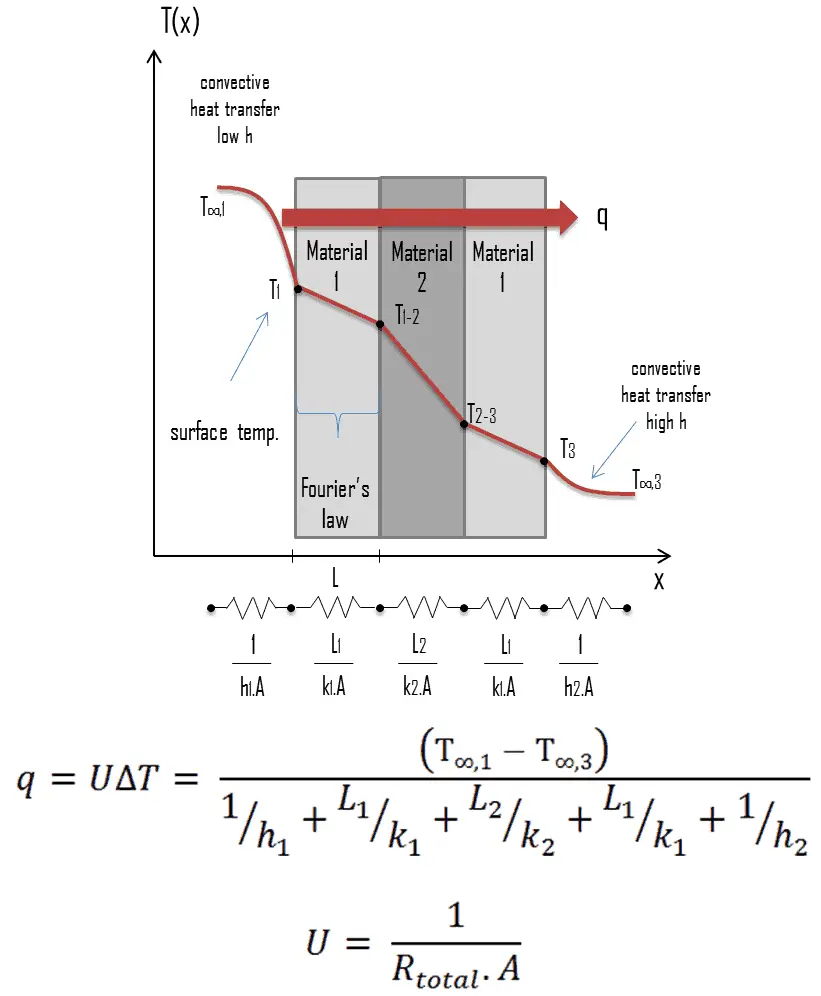
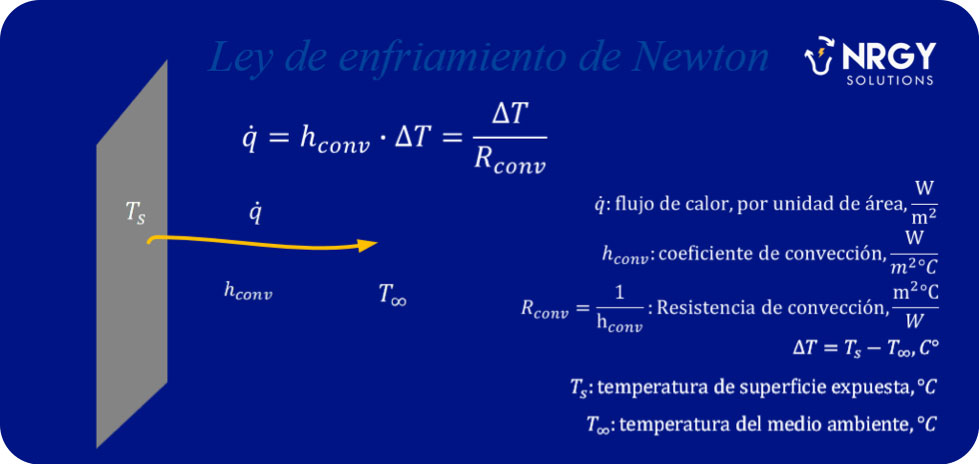
The heat transferred by convection per unit area per degree temperature difference between the surface and the fluid. Also called unit convection conductance; surface coefficient.
Example: film coefficient, or film effectiveness, in thermodynamics and in mechanics is the proportionality constant between the heat flux and the thermodynamic driving force for the flow of heat
es: coeficiente de película
heat flux
phrase
Heat flux or thermal flux, sometimes also referred to as heat flux density[1], heat-flow density or heat flow rate intensity is a flow of energy per unit of area per unit of time. In SI its units are watts per square metre (W/m2). It has both a direction and a magnitude, and so it is a vector quantity. To define the heat flux at a certain point in space, one takes the limiting case where the size of the surface becomes infinitesimally small
Example: Roof systems reinforced concrete roof slabs pre-cast concrete roof systems Services Thermal INSULATION
es: flujo de calor
heat sink
noun
A heat sink (also commonly spelled heatsink[1]) is a passive heat exchanger that transfers the heat generated by an electronic or a mechanical device to a fluid medium, often air or a liquid coolant, where it is dissipated away from the device, thereby allowing regulation of the device's temperature. In computers, heat sinks are used to cool CPUs, GPUs, and some chipsets and RAM modules. Heat sinks are used with high-power semiconductor devices such as power transistors and optoelectronics such as lasers and light-emitting diodes (LEDs), where the heat dissipation ability of the component itself is insufficient to moderate its temperature.
Example: A heat sink is designed to maximize its surface area in contact with the cooling medium surrounding it
es: disipador de calor
upstream data
phrase
In computer networking, upstream refers to the direction in which data can be transferred from the client to the server (uploading). This differs greatly from downstream not only in theory and usage, but also in that upstream speeds are usually at a premium.[1] Whereas downstream speed is important to the average home user for purposes of downloading content, uploads are used mainly for web server applications and similar processes where the sending of data is critical. Upstream speeds are also important to users of peer-to-peer software.
Example: An upstream provider is usually a large ISP that provides Internet access to a local ISP